
Definition
Hyperkalemia (K+) is defined as a potassium level greater than 5.5mmol/L.
Clinical Features
Hyperkalemia presents with the following depending on the severity: CMS!
Cardiac: Cardiac Instability, Cardiac Arrest
Motor: Muscle weakness, Decrease tendon reflexes, Ascending flaccid paralysis, Respiratory Paralysis
Sensory: Paraesthesia
Investigations
- Blood Gas: Shows change in K+.
- Formal Blood: This takes too long. Hyperkalemia is an emergency.
- ECG: This is very important and should be done every time Hyperkalemia is suspected. From now on, think that Hyperkalemia = ECG.
ECG Findings
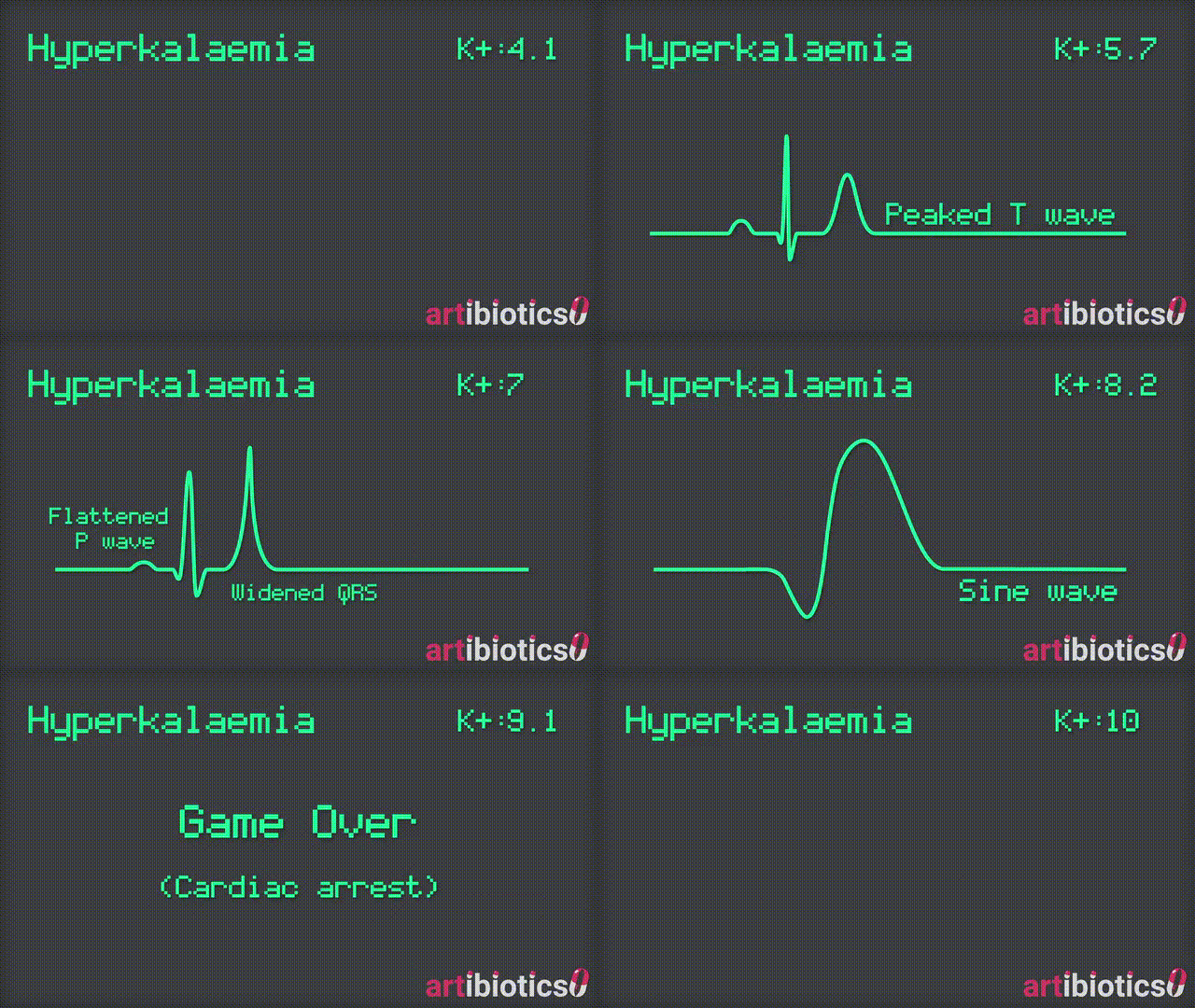
These findings usually progressively worsen as the K+ level increases. The list below highlights the order in which these changes tend to occur. However, this is not always the case. The best way to memorize these changes is the think about what happens in each PQRST section of the ECG.
- Tall, peaked T-waves. These waves are usually taller than the R-waves in 2 or more leads.
- Prolonged PR interval
- Flattening or absence of P-waves
- Wide QRS Complexes (>0.12s)
- ST Segment Depression
- Deep S waves
- Merging of the S and T-waves (Sine wave pattern)
- Bradycardia
- Ventricular Tachycardia
- Ventricular Fibrillation
- Pulseless Electrical Activity or Asystole
Management
You need to be able to check the K+ levels and monitor them 1-4 hourly depending on the severity. These patients ideally should always have an ECG monitor attached. Hyperkalemia is an emergency if the K+ levels are greater than 6.6mmol/L, when there are ECG changes or when there are any neurological manifestations.
Step Wise Approach
- Stop any K+ Supplements
- Stop any medications that can increase K+ levels: K+ Sparing diuretics, ACE Inhibitors, NSAIDS, ARBs
- Remove K+ from the body:
- Kayexalate 15-30g in 50-100ml of water 6 hourly orally. The duration of this effect is around 6 hours.
- Furosemide 40-80mg IV (0.5-1mg/kg) over 1-2 mins. Only do this if the patient is NOT dehydrated.
- Shift the Potasium into the cells:
- 50-100mls of 50% Dextrose with 10 units of a fast-acting (Actrapid) insulin IV over 15-30mins. The onset of action is around 30mins and its duration of action is around 6 hours. Remember to monitor blood glucose levels hourly for a period of 6 hours.
- Haemodialysis
- Once K+ > 6.5, this is a severe hyperkalemia
- You do as above
- Nebulize Salbutamol 10-20mg over 15mins. Onset is within 15mins and the duration of action is around 90mins. You should repeat as needed.
- Sodium Bicarbonate 50ml of 8.5% IV over 5mins. Then you can add another 50-100mls of this Sodium Bicarbonate into 1L of 5% Dextrose Water over 2-4 hours.
- If the patient has ECG changes (however, sometimes given regardless)
- Add Calcim Chloride 10ml of 10% IV over 5mins BEFORE any of the above (should be done first). Calcium stabilizes the cell membrane. Do not give it together with Sodium Bicarbonate to prevent precipitation.
- Keep on monitoring and searching for the cause.
References
- Kloeck, W., 2017. A Guide To The Management of Common Medical Emergencies In Adults. 11th ed.