The four pillars of Medical Ethics
Basics
Medical ethics is one of the branches that arises from general ethics. It is based on certain values or principles, namely: Beneficence, Non-Maleficence, Autonomy and Justice. These values are also known as the four pillars of medical ethics. These principles are all important and they are not ranked in any particular order. These principles assist the health care professional in making the most ethical choice for patient care.
Historically speaking, it is often said that beneficence and non-maleficence were the first two principles to form part of these important pillars. Many years ago in the times of Hippocrates the main goal of patient care was, “to do no harm”. However, as time went by, the other two principles became increasingly important. It was common in the mid-20th century to have doctor-patient relationships that were characterized by a paternalistic attitude. This meant that most of the time there was lack of respect for the autonomy of the patient. This has now changed and a paternalistic attitude towards patient care is often seen as ethically inappropriate.
Paternalism may be divided into soft (patient is non-autonomous) and hard paternalism (patient is autonomous). Hard paternalism is ethically inappropriate because a patient’s autonomy is not respected. On the other hand, soft paternalism is seemed as more ethically appropriate because it is only performed when the patient loses their ability to have autonomy and the medical health professional acts according to the principle of beneficence.
On the opposite side of paternalism is consumerism. Consumerism restricts the health care professional role in the decision making process in a manner that it no longer benefits the patient. This is also ethically inappropriate.
The Pillars
- Beneficence
- The health care professional should act in the best interest of the patient. The difference between beneficence and non-maleficence lies in that beneficence has a positive connotation. Here the health care practitioner not only avoids doing harm to the patient but also aims to provide a health care choice or act that upholds and benefits the patient’s well-being.
- Non-Maleficence
- To do no harm, or to promote more good than harm for the patient. Often quoted as “first, do no harm,” or in the Latin from as, “primum non nocere”.
- This is important to keep in mind when deciding any form of patient care. For instance, one should weigh the advantages against the disadvantages of a particular medical/surgical intervention.
- Respect for Autonomy:
- The patient has the right to refuse or choose a form of treatment.
- The individual should be competent, to perform an rational, uninfluenced, informed decision.
- Autonomy may sometimes be overridden, especially in cases were the patient’s decision puts in danger another person. However, sometimes autonomy is overridden erroneously this is sometimes due to a paternalistic attitude.
- The patient should be competent (this is determined by a court of law) and have sufficient capacity (assesses by a health care professional, the patient cannot make a medical decision in their current situation) to make this decision. Therefore, medical health practitioners should be able to assess for capacity rather than competence. In order to assess capacity, a health care practitioner should be able to perform a mental state examination (MSE).
- Distributive Justice:
- Refers to equity and the distribution of resources.
- The treatment of the patient should be equitable and appropriate.
Interesting Ethical Cases
- Dr Henry Cotton’s Case: Surgical removal of body parts to improve mental health (1920s).
- The Monster Study: Stuttering Experiment performed to orphan children (1930).
- Medical Experimentation on Black Americans: This has occurred over several decades. Dr J. Marion Sims, also known as the “father of gynecology”, inventor of the Sim’s speculums developed many of his surgical techniques by operating on enslaved black women. Many black Americans were diagnosed with psychosis due to their civil rights ideas.
- Albert Stevens’ Case: Plutonium injections performed by doctors of the Manhattan Project (1945 -1947).
- The Doctors’ Trial: Doctors went on a criminal trial for the Nazi human experiments. (1946)
- Guatemala Syphilis Experiments: Doctors infected people with syphilis without their informed consent. (1946-1948)
- Dr Perry Hudson Urology Experiment: Also known as the Skid Row Cancer study. (1950s)
- Henrietta Lack’s Case: Cells taken without informed consent are used for various scientific research. (1951)
- Dr Harry Bailey’s Case: Deep sleep paralysis used to treat mental health care users. (962-1979).
- Stanford Prison Experiment: A study to show the psychological effects of becoming a prisoner or a prison guard. (1971)
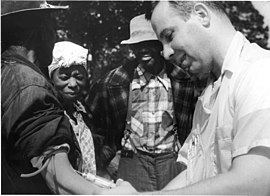
- Tuskegee Syphilis Experiment: This was a 40-year experiment that target black males. (1972)

Read More
In 1999, he faced 67 charges including drug possession, drug trafficking, embezzlement, at least 229 murders and theft. However, in 2002, he was acquitted of all his charges. In 2006, the HPCSA began their own investigations and in 2013 they found Dr Basson guilty of four charges (professional misconduct). However, in 2019 the Gauteng High Court ruled that the proceedings by the HPCSA against Dr Basson was irregular and unfair. Dr Basson has been working as a cardiologist in Cape Town since 2005. Source: Wikipedia


Made with ❤️ by QuickBeat
We are a small education agency that aims to provide medical education.
EXPLORE
SERVICES
CONTACT
- Pretoria North, Gauteng
- contact@quickbeat.co.za