SummaryThis is a brief article on Tinea corporis, describing the route of transmission, risk factors, description of the rash, and the management.
Basics
This is a superficial cutaneous infection caused by a fungus known as a dermatophyte. The other name used to describe a tinea infection is ringworm. This infection appears on the arms and legs, especially on glabrous skin.
Transmission
Human-to-human transmission
Animal-to-human transmission
Inanimate objects (toiletries, beds, linen, etc) to human transmission
Risk Factors
Patients who live in crowded humid conditions
Patients that participate in close contacts
Wear tight clothes with poor aeration, resulting in increased sweat and moisture.
Immunocompromised states (HIV, Diabetes Mellitus, Immunosuppressive Drugs)
Description
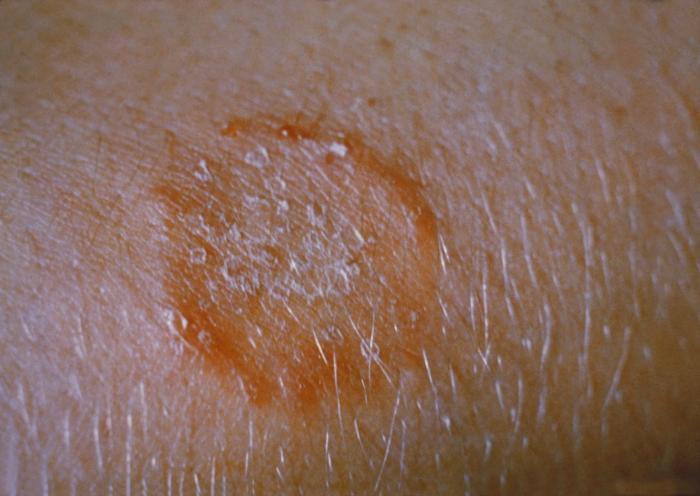
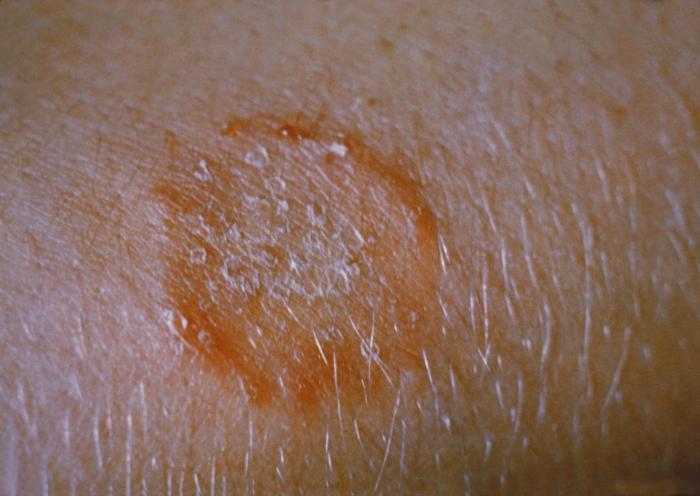
Figure 1: Ringworm on the arm, or tinea corporis due to Trichophyton mentagrophytes.
Itchy ring-like patches
Raised borders
Scales to touch
Patches slowly grow bigger, and as this patch extends the central area becomes clear. In patients with darker skin, this area may become hyperpigmented.
There may be hair loss in the area of infection.
Management
General
Prevent the infection from spreading to others. Advice the patient to not share any clothes, towels, toiletries.
Wash skin well and dry before the application of medicine.
Medical
Imidazole: Clotrimazole 1% cream topical applied three times per day. The cream should be used for at least 2 weeks after the lesions have been cleared.